Follow THISDAYLIVE on GoogleAdd us as a most well-liked supply to see extra of our tales in Google
Vanessa Obioha
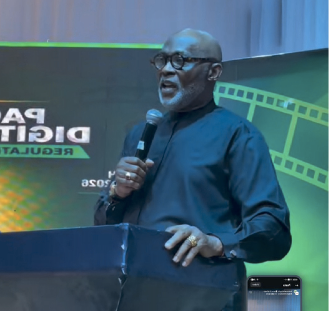
Veteran actor Richard Mofe-Damijo has referred to as for a regulatory framework that protects artistic expression whereas preserving tempo with technological development, warning in opposition to insurance policies that would stifle innovation in Nigeria’s artistic trade.
He made the decision whereas delivering the keynote deal with at the sixth version of the Peace Anyiam-Osigwe Nigerian Digital Content Regulation Conference (PAO-NDCRC), held just lately at the MUSON Centre, Onikan, Lagos.
The two-day convention, organised by the National Film and Video Censors Board (NFVCB), introduced collectively stakeholders within the movie and digital content material industries to look at the theme, ‘Film and Content Production in the Digital Era: Balancing Regulation and Innovation’.
Mofe-Damijo, popularly referred to as RMD, described the digital revolution as probably the most vital transformations in storytelling, noting that the shift from conventional broadcasting to streaming platforms and social media had democratised content material creation by eradicating typical gatekeepers and turning shoppers into creators.
He additionally highlighted the alternatives and challenges posed by synthetic intelligence, notably issues round misinformation, mental property and possession of works modified or generated by AI.
“The question before us is not whether we should embrace innovation. We have no choice but to embrace it. The real question is whether our institutions, policies and industry practices can evolve quickly enough to manage the opportunities and risks that come with it,” he stated.
While acknowledging the necessity for requirements and accountability, RMD cautioned that an understanding of the artistic trade should inform regulation and will contain engagement with its practitioners. “There is a difference between regulating an industry and restricting its capacity to grow. There is also a difference between protecting society and unnecessarily inhibiting creative expression. We must find the balance,” he stated.
He urged regulators to offer readability and confidence relatively than create uncertainty and worry, including that regulatory frameworks should evolve alongside expertise to stay related.
On possession of works created or modified utilizing synthetic intelligence, he referred to as for proactive insurance policies that encourage technological experimentation whereas safeguarding human creativity and the rights of artistic professionals.
“Technology should expand the possibility of creativity,” he stated.
The Executive Director of the NFVCB, Shaibu Hussein who convened the convention, additionally highlighted developments throughout the company, together with the acquisition of a everlasting headquarters, which he stated it anticipated to occupy by January 2027.He added that the board was digitising its operations to maneuver away from outdated analogue processes.
The convention additionally featured contributions from filmmaker Tunde Kelani and producer Femi Odugbemi, alongside a presentation by streaming platform Netflix on its actions in Nigeria’s movie trade.